
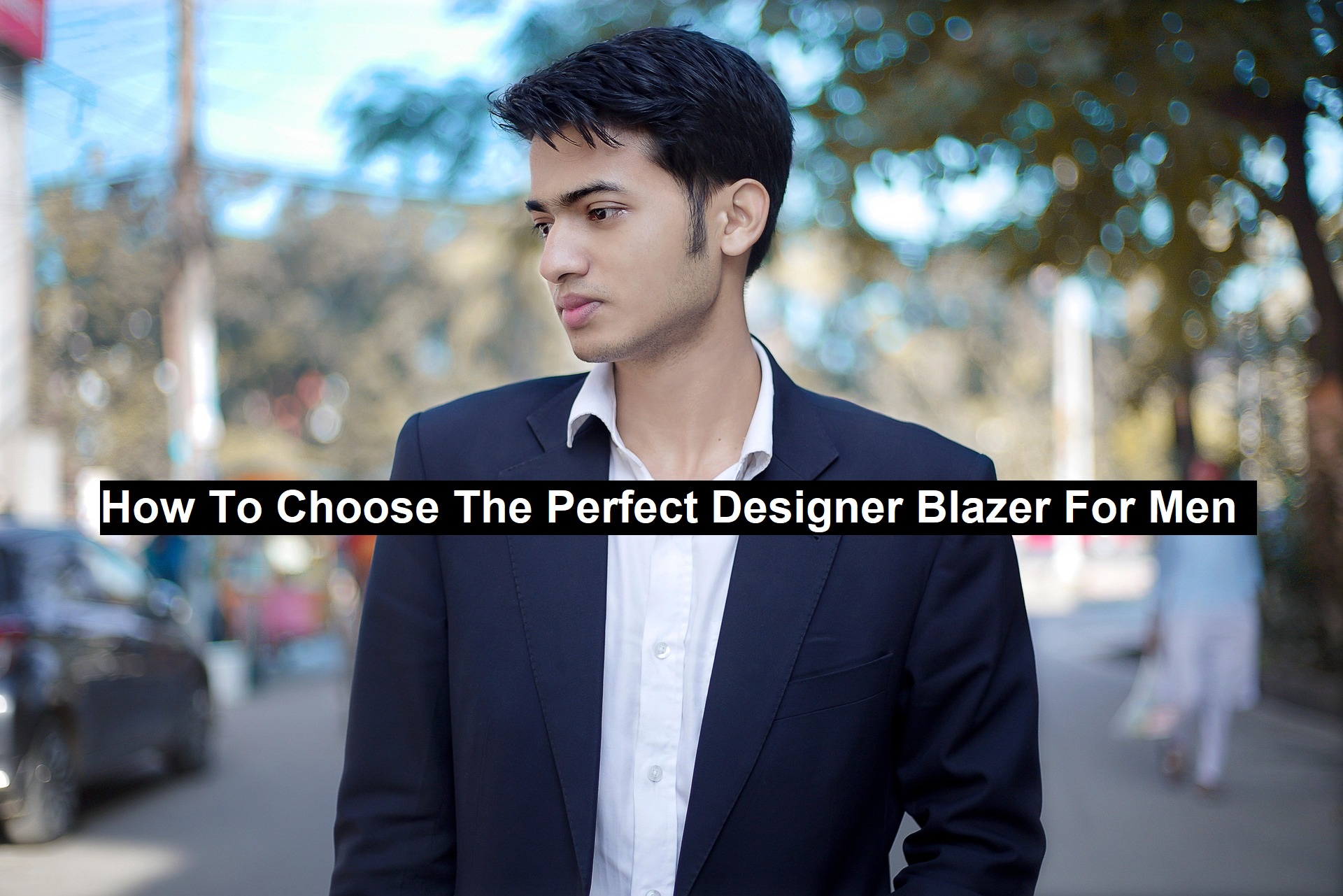
How To Choose The Perfect Designer Blazer For Men
A well fitted designer blazer can change a man’s entire look. It can give an air of sophistication, confidence and spontaneous style. Whether it is for a formal event, a business meeting, or a casual night, the right blazer can be the game changer. But choosing the right designer blazer is not about taking out the most expensive one from the rack. This requires an understanding of clothes, fit, event, personal style and craftsmanship. This guide will run through everything you need to learn to invest in a designer blazer that suits you in every sense.
1. Understanding the Purpose
Before diving into the brands, clothes and cuts, it is necessary to understand why you are buying a blazer. Is it a casual outing or a business trip, the occasion plays a significant role in choosing the perfect blazer.
- For Business/Formal Wear: A blazer should be classic, clean and structured for work or formal opportunities. Think of dark colors like navy, charcoal, or black with the least patterns or embellishments.
- For Smart Casual Outfits: You can go for light colors, interesting textures, or even patterns. Linen and cotton blends work well in such situations where you can pair them with shorts or chinos.
- For Special Occasions: Designer blazers can be more expressive for weddings, galas, or dinner – you can imagine velvet clothes, metal finish, or sophisticated prints which are suitable here.
Knowing the purpose helps narrow the sea of options that actually serve your lifestyle.
Read: What is Salesforce Marketing Cloud Journey Builder, and How Can It Help You?
2. Choose the Right Fit
The single most important element of any blazer – designer or not – is the fit. Even the most spectacular material will be flat if the blazer does not sit well on your body. Therefore, the fit of the blazer should never be ignored.
Types of Fits:
- Slim Fit: Designed to contour the body. Ideal for lean & athletic build.
- Regular Fit: A classic cut that suits most types of body and provides space for movement.
- Relaxed Fit: Loose and more casual, often used for layering or oversized streetwear look.
Key Areas to Check Fit:
- Shoulders: The seam should end properly right where your shoulder ends. If it drops, it is very large. If it is tight, then go for a bigger size.
- Chest and Waist: You should be able to button up without pulling the blazer. A good rule: you should fit a closed fist inside the blazer when it is buttoned.
- Sleeves: They should simply finish at your wrist bone, showing half an inch of your shirt cuff.
- Length: Ideally, the blazer should be covered just below your seat or your hip bone.
If you are buying off the rack, be ready to take it to a tailor for a minor adjustment. Even designer blazers can benefit from such custom tailoring.
3. Fabric Matters
Different clothes provide different look, feel and seasonal suitability. When choosing a designer blazer, pay full attention to the material, as it can greatly affect comfort and versatility as the season and occasion plays a major role in deciding.
Common Fabrics:
- Wool: The most common blazer fabric. It is durable, breathable and suitable for almost all seasons. Go for light wool if you want something which can be worn for a full year.
- Linen: Light and breathable – great for summer and tropical climate. However, it is easily prone to wrinkles so kindly keep that in mind.
- Cotton: Versatile and comfortable, cotton blazers work well for semi casual and casual opportunities.
- Velvet: Reserved for evening wear or formal events. They are rich in texture and great for the festive season.
- Tweed: It is most suitable for fall and winter. The fabric is heavy and gives a rugged, classic vibe.
- Blends: Wool-silk or wool-cashmere mixes often feature enlarged textures and a sophisticated feel in the designer blazers.
Choose clothes depending on the level of temperature, weather and the occasion.
4. Color and Pattern
Designers offer a wide range of colors and patterns, allowing you to express your style more courageously.
Classic Colors:
- Navy Blue: The most versatile and timeless option. Perfect for business, weddings, or casual wear.
- Charcoal Gray: Ideal for formal settings. It is easy to pair with black and white.
- Black: Elegant and smooth, mostly for formal events or weddings.
- Camel/Tan: Great for daytime or summer wear.
Trendy & Seasonal Colors:
- Olive, Burgundy, Maroon: Popular for fall and winter.
- Powder Blue, Mint, Cream: Perfect for spring and summer.
Patterns:
- Solid: There should be one in every wardrobe.
- Checks and Plaids: Great for smart casual or adding character to the look.
- Stripes: Pinstripes give off a business vibe.
- Florals or Embroidery: Suitable for festive or designer statements.
Ensure that whatever color and pattern you choose, it matches with other pieces in your wardrobe so that you can create versatile outfits.
5. Pay Attention to Construction
The construction of a blazer determines its quality and how long it will last. Designer blazers often feature premium craftsmanship—knowing what to look for helps you assess their actual value.
Key Elements:
- Canvas: It refers to the inner layer between outer fabric and lining. High end blazers often use full canvas or half canvas construction for better drapes and longevity.
- Stitching: Hand stitched blazers (often found in luxury designer brands) will have fine, more durable stitch as compared to machine made.
- Lining: Fully lined blazers are more structured and formal. Partially lined or unlined versions are lighter and cooler, ideal for casual or warm weather wear.
- Lapels: Choose the lapel style based on the event.
- Notch Lapel: Most versatile. Works in all settings.
- Peak Lapel: More formal and fashion-forward.
- Shawl Lapel: Often found in tuxedos or eveningwear.
- Notch Lapel: Most versatile. Works in all settings.
6. Designer Labels Worth Considering
If you’re investing in a high quality designer blazer, then there are some prestigious menswear brands known for their tailoring and blazers that you must consider:
- Giorgio Armani: Soft tailoring and Italian elegance is known.
- Tom Ford: High-end, bold cuts with a modern silhouette.
- Canali & Zegna: Offer timeless Italian craftsmanship.
- Saint Laurent: Edgy, slim silhouettes perfect for younger audiences.
- Ralph Lauren Purple Label: A blend of American classic and European refinement.
- Paul Smith: British tailoring with a playful twist—think colorful linings and quirky details.
- Balmain, Dior, Off-White: For more fashion-forward, trendsetting blazers.
Pick a designer who matches your style and beliefs—whether that’s minimalism, traditional tailoring, or cutting-edge fashion.
7. Versatility is the Key
Although it can be attractive to go for a statement piece, an ideal designer blazer must be versatile to wear in several settings. Here’s how to ensure this:
- Mix and Match: Select a blazer that is easily dressed up over trousers or dressed down over jeans.
- Layering Potential: It should fit comfortably on a shirt or light sweater without feeling heavy.
- Neutral Shades: A charcoal or navy blazer is much simpler to mix and match for various occasions.
- Minimal Embellishments: Except for a showpiece, steer clear of too trendy cuts or trimming that will fall out of favor in a short while.
8. Trial Before Purchase (or Smart Online Shopping)
If purchasing in-store, wear the blazer and walk around in it. Sit down, arm up, and see how it moves.
If purchasing online:
- Pay close attention to the size chart.
- Consider customer reviews and photos.
- Make sure there’s a return or exchange policy.
- Compare fit type and cut in brands – you can be 40r in one label and 42r in another.
Some sites and brands have virtual fitting rooms or online guides to tailoring—use them.
9. Don’t Neglect the Details
Small details can take a blazer from great to spectacular.
- Buttons: Horn or metal buttons often indicate high quality than plastic.
- Pockets: Patch pockets = informal; flap pockets = business casual; jetted pockets = formal.
- Button Stance: Two-button blazers are timeless and flattering for most body types. Three-button styles are more old-fashioned.
- Vent Style:
- Double Vent: Provides flexibility and suits most men.
- Single Vent: Used in American designs, a bit old-fashioned.
- No Vent: Elegant, but limits movement—mostly for the events where you will not be very active.
10. Care and Maintenance
Even the finest blazer will suffer from loss of shape and sheen if neglected.
- Dry Clean Sparingly: Overuse of dry cleaning weakens fabric. Spot clean where feasible.
- Brush After Wear: Gently brush with a clothes brush to remove dust and lint.
- Proper Storage: Hang always on wide-shouldered hangers. Use garment bags for seasonal storage.
- Steam, Don’t Iron: Steaming preserves shape and eliminates wrinkles without harming fabric.
Conclusion
Picking the ideal designer blazer for men is a mixture of art and science. It is about understanding your body, your needs and your personal style – then finding a blazer that brings them all originally together. The correct fit, with clothes and design, a designer blazer can become one of the most powerful devices in your wardrobe. Whether you are stepping into a boardroom, wedding hall, or a classy lounge, the right blazer only makes you look better – it makes you feel invincible. So browse around, do your homework, and spend your money wisely. A properly selected blazer isn’t a buy—it’s a declaration.


More Stories

Finding Calm: How a Panic Attack Therapist Can Help You Regain Control
In today's hectic, high-pressure world, worry has become a common companion for many people. However, if your anxiety gets so...

Top 10 Ralph Lauren Hoodies To Wear This Winter in 2025
Ralph Lauren is unparalleled in the realm of infusing classic American style with simple comfort. The brand is synonymous with...

Profit-Boosting Tips for Small Garage Door Business Owners
Running a small business is a journey filled with both challenges and immense rewards. For garage door business owners, the...

5 Signs You Need a Salesforce Implementation Partner
In the business world, one of the strongest Customer Relationship Management (CRM) platforms on the international market is Salesforce. However,...

Why ISP Proxies Are Gaining Popularity Among Web Professionals
The internet has become an essential battlefield for businesses and marketers, where speed, anonymity, and access dictate success. While traditional...

What is Salesforce Marketing Cloud Journey Builder, and How Can It Help You?
Salesforce CRM consulting: I have observed significant organizational benefits that emerge from successfully implementing marketing automation. Salesforce Marketing Cloud's Journey...